Essential Operator Education · Live · Four weeks

Coworking Foundation.

Many decisions that determine whether a coworking space works are all made before it opens.

Seven modules covering everything that is hard to undo: the business model, the site, the positioning and the numbers, the structure, the floor plate, the people and the stack. Taught live, two modules a week, with a Q&A every week.

The whole thing is done in a month and you can work on your real business rather than a case study. No experience required, and a cohort starts every two months from November 2026.

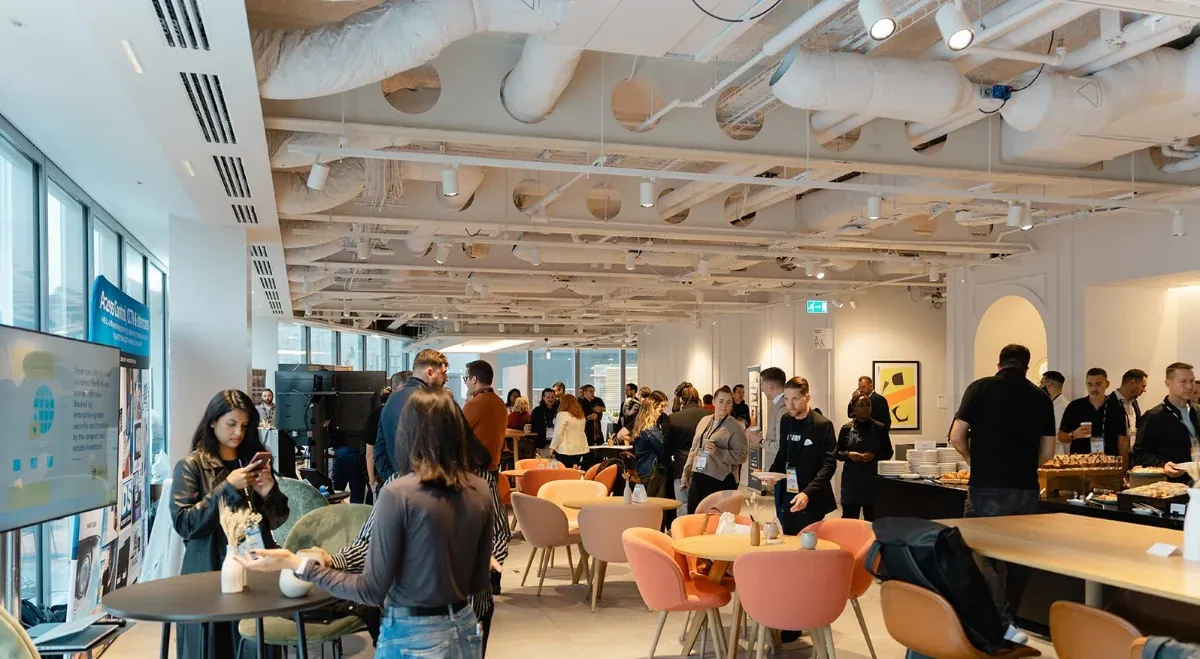
Plate 01 · 4:5 · One person standing in an empty or half-fitted commercial space, looking at it rather than at camera. Bare floor, exposed services, big windows, natural light. The moment before commitment.
GCUC · Manchester
FormatTaught liveOnline · two modules a week
CurriculumSeven modulesPlus a Q&A every week
LengthFour weeksNext cohort November 2026
FeeUSD 2,500Refundable — see below

// 01 · Why

The expensive decisions all happen before you open.

Most coworking businesses don't struggle because the operator lacked passion. They struggle because six or seven decisions were taken in the wrong order, under time pressure, before anyone had modelled what they cost. By the time the doors open, every one of them is already load-bearing.

The lease

Signed on an untested assumption

A five or ten year commitment made on a demand estimate nobody checked, in a building chosen because it was available. The least reversible decision in the business is usually the first one taken. Do you even need a lease?

The model

Breaks even at a number you'll never hit

A spreadsheet that works at occupancy levels most spaces never reach and almost none reach in year one. The error isn't in the calculations, it's the assumptions underneath.

THE FLOOR PLATE

Design for instagram not revenue

A floor plan optimised for how it photographs, will cause issues with everything from product mix, revenue systems to ergonomics. Your designers unknowingly make decisions that define your yield for the life of the location.

// 02 · Who

You don't need a space yet. You need a plan.

Coworking Foundation has no entry requirements. We will match you to a cohort based on time zone. You might not start with a plan, but on a course designed for early operators you will certainly leave with one.

Ideal student profiles

Profile 01

The aspiring operator

You've been thinking about coworking for a while. You may have a site in mind, or just an area. You want to understand the business properly before you go any further and before you to sign something.

Start here · This is the programme written for you
Profile 02

The landlord

You have vacant commercial space and you're weighing coworking as a way to commercialise it. You might be considering a Franchise or Managed Operator and you need the operational reality rather than the sales pitch. Including an honest read on what it costs to run in time and money.

Start here · Modules 01, 04 and 05 matter most
Profile 03

The career changer

You've worked in or around coworking: as a member, a community manager, in commercial property or hospitality. Now you want to open your own, and you'd rather not learn the structural parts by getting them wrong.

Start here · Then Institute membership to stay connected
Profile 04

The recent operator

You've been open under two years and you learned so much the hard way. Maybe You want the foundations checked before go further with a second site or a management agreement. Or maybe you want to stop doing it all alone.

Start here · THE COWORKING MBA IS THERE WHEN YOU ARE READY FOR MORE
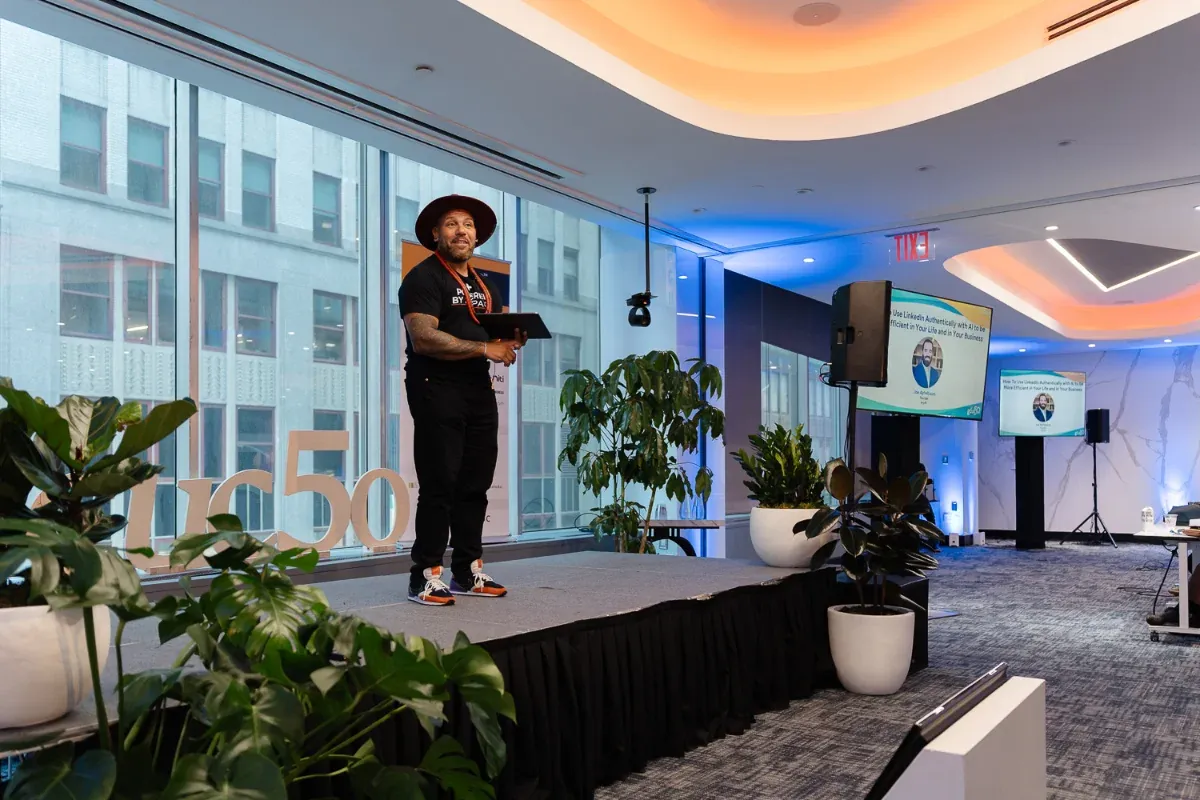
Plate 02 · 64:17 · Two or three people walking a vacant floor plate, one holding a rolled plan or tablet, mid-conversation with an agent or landlord. Wide, shot from behind. Unfinished space. Nobody posed.
GCUC · London

// 03 · Curriculum

Seven modules. Seven critical domains to get right.

Structured in the order the decisions arrive; the model, the building, the position, the structure, the floor plan, the people, the stack. Each module ends with tangible documents about your project, not a quiz and not a reading list. By module seven you are holding a operating manual rather than a set of notes.

01

The Coworking Business Model

Which coworking business are you actually building — and what can it earn?Revenue structures, cost structures, margin realities, and the fundamental differences between a coworking business and a serviced office. Different models side by side, each with the shape of operations and P&L it produces.Tool · The Model Comparison
You leave withA written statement of which model you are building and why.
02

Location & Market Analysis

How do you judge a building before you are committed to it?A building will not tell you whether it is a good building, it will tell you it has exposed brick and good light and you need to discern the rest yourself. We share the twenty one factors we score when choosing locations.TOOL · THE TWENTY ONE-FACTOR FIT FILTER
You leave withA scored assessment of your building, and the questions to ask at heads of terms
03

Positioning & Feasibility

Who are you actually for and do the numbers work?Positioning and feasibility are the same question asked differently, so they are taught together. Positioning decides who you are built for: Solving real problems. The test is a P&L built around the position. TOOL · DATA LINKED PERSONAS · FLOOR PLAN YIELD CALC.
You leave withA positioning statement, a working P&L, a breakeven occupancy and the runway you actually have
04

Legal & Corporate Structuring

Who eats a bad year?Deal structure is a separate decision from the building, and it decides where risk and rewards sits. The ladder runs from traditional lease through management agreement to joint venture and ownership. More upside requires more capital and more risk. Tool · The Deal Ladder
You leave withA structure decision — entity, agreement type, and where the liability sits
05

Design for Revenue and Retention

What does your fitout say about your brand? A floor plan is revenue and retention system: the layout is the physical manifestation of your brand values. Your space mix decides your ceiling, cash flow risk and maximum occupancy potential. But a design that earns on a spreadsheet doesn't automatically make people want to stay. So finding the balance between delight and revenue is critical.Tool · The Product Mix Grid
You leave withA product mix, a yield target, a member lifetime value, and the decisions on your plan you cannot reverse
06

Building Healthy Teams

Who do you need and what happens once they are here?Coworking is about community. Without incredible people your space is just a shell. We cover the key roles and the ideal temperaments for each one. We teach the basics of psychometric profiling for matching a person to a role. Then leadership of empathetic teams.Tool · The Role & Temperament Map · The Automation Line
You leave withA hiring plan for your first roles, the temperament each needs, and where you have drawn the line on automation
07

The Tech Stack

How to design a technology stack in the era of constant change?We teach the current best practice on building tech stacks in coworking, validated by automation experts. Looking at multiple layers; infrastructure, operations, member experience and operating intelligence.Tool · The TECH Stack Audit · Irreversible Decisions Chklist
You leave withA specification of what you buy, in what order, and what must be decided before fit-out

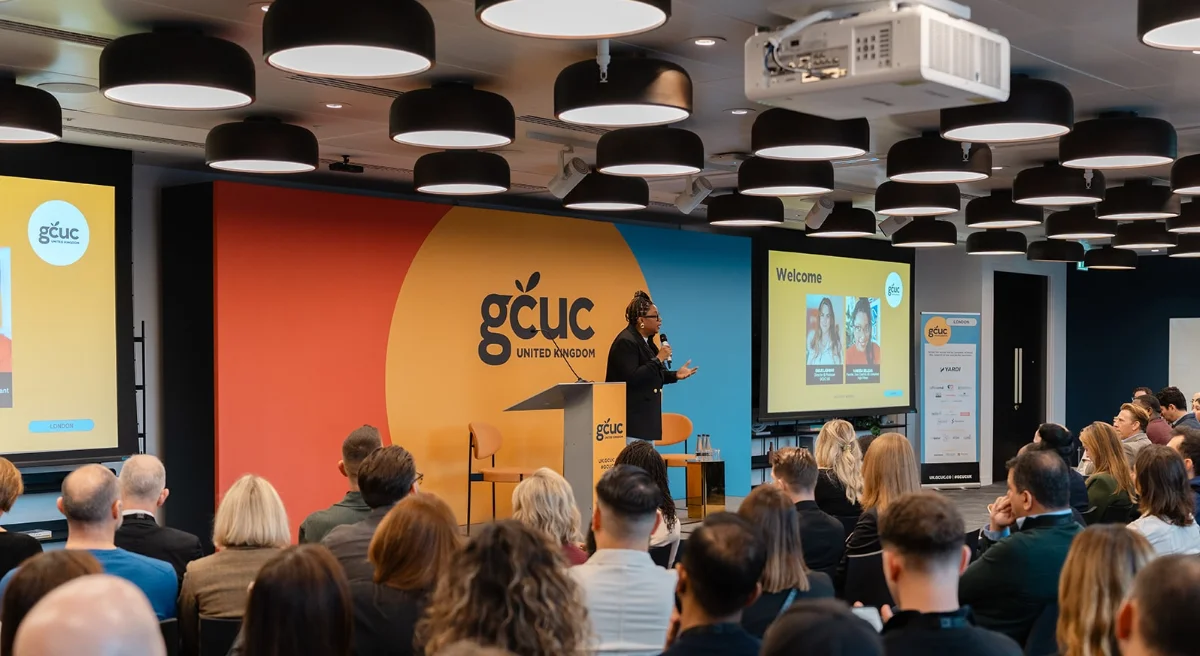
Plate 03 · 3:2 · Someone working through a printed workbook at a real desk, pen in hand, laptop beside it, coffee. Hands and paper in focus; face optional.
GCUC · New York

// 04 · Applied

Every module runs through the same three businesses.

Frameworks are easy to nod along to and hard to apply. So each module ends by running its material through three composite operators, built from real case studies. By the end of the month, you will have watched seven decisions play out across all three. One of them is closer to yours than you think.

Case 01

The Pre-opener

4,200 sq ft on a second floor in a mid-size city. Nothing signed. $180,000 of savings and a nervous business partner.

Module 05 asksAllocate zones across product types and find the revenue floor before signing anything.
Case 02

Single Site

Year three. 9,000 sq ft, 78% occupied, revenue flat five quarters running, 4% monthly churn. No idea which lever to pull.

Module 03 asksIs 78% a pricing problem or a mix problem? The model tells you which and they need opposite responses.
Case 03

The Scaler

One 12,000 sq ft site running at 94%. Negotiating sites two and three, and choosing between a lease and a management agreement.

Module 04 asksWhich structure do you take site two on and how do you manage risk if your expansion is slow to fill?

// 05 · Delivery

Two modules a week. Done in a month.

Every session is taught live to a cohort not a recorded video library. Two modules a week for four weeks, with regular Q&A sessions. Bring your own building, your own numbers and your own landlord's opening offer.
Short enough to finish, long enough to do the work.

Twice a week

The modules, live

Taught by a practitioner, with the frameworks worked in front of you and time for questions in the room. Once your cohort is set, its slot is fixed for the four weeks.

Between sessions

The workbook

Each module comes with a structured workbook you complete on your own project. Filled in badly with the numbers you actually have beats filled in perfectly next month.

REGULAR

Live Q&As

A live hour at the end of each week, held after the work rather than after the lecture — so it becomes a clinic on the cohort's real problems instead of a spare question slot.

After

You keep all of it

The workbooks, the models and the templates are yours, including future updates. Come back to module 03 when the lease is actually in front of you.

7

Live sessions in four weeks — seven taught modules and regular Q&As. Plan a couple of hours a week on your own workbook between sessions. This is a global programme, Cohorts are built around where people register: tell us your time zone and we group you with peers who can make the same hour.

// 06 · Outcome

An operating file, not a certificate.

Coworking Foundation is built so every module produces part of a master document about the space you are actually running. You finish holding the coherent plan for your business.

  • 01A model and a scored building — which business you are building, and whether the site in front of you survives all six factors.
  • 02A positioning statement and a working P&L — who it is for, and the breakeven occupancy underneath it on your own assumptions rather than a template's.
  • 03A structure decision and a priced floor plate — what you sign as, where the downside sits, what every square metre has to earn.
  • 04A hiring plan and a stack specification — the first roles and the temperament each needs, then what you buy, in what order, and the decisions the fit-out will close off.
On completion
The document to steer your team. Is also the one a landlord or Investor asks for

It is also the document a bank asks for, and the one a business partner wants to see before they put money in. Seven modules, seven completed tools, one file. A certificate is issued on completion but the file is what you came for.

// 07 · After

Foundation gets you open. What follows is a longer arc.

The Institute is built as a career, not a catalogue. Foundation is the first thing, and it is deliberately the only one with no entry requirement — everything after it assumes you have a business running.

WhatWhat it meansWhen
Graduate membership
Completers can join the Institute as Graduate Members and gain access to the operator community, the Coworking Wiki and Resources, monthly Ask-Me-Anythings and the guest speaker series. The programme ends; the access doesn't, which matters most in the year you actually open.
USD 100 / month
The Coworking MBA
Ten months, ten modules, written for operators with a running business and responsibility for its P&L. It is not the next thing you buy — it is the thing you come back for once Foundation has done its job and you have two years behind you.
Two years in
Executive Education
Short electives on a single domain — AI, sales, operations — for when your business has one specific gap rather than a general one. No prerequisites, so it runs alongside anything.
Any time

// 08 · In person

There is also a one-day version.

Two things share the Foundation name and they are not the same. Coworking Foundation is this full programme; Coworking Foundations Miami is a single intensive day delivered in partnership with GCUC for those who want the in-person experience.

Plate 04 · 3:2 · A workshop room mid-session: clusters of operators, one person teaching at the front, laptops and notebooks open. Warm, busy, in-person.
Muzammil Soorma
Coworking Foundations Miami
Mindspace Wynwood · Monday 5 April 2027 · USD 500

08:00 to 17:00 the day before GCUC Miami opens. Seven forty-five minute working sessions, each taught by an industry practitioner. The day finishes with every lecturer back on stage together for a full hour of questions with no slides and no agenda. You leave with a forty-page workbook filled in.

It is a day to get oriented, not a programme to work through — the sessions are compressed versions of full Institute modules, drawn from across the Foundation and the MBA. If you are coming to GCUC anyway, This is a great addition. If you are opening a space or a landlord considering a Franchise - take the programme. The day is a good way to decide which.

  • The dayOne day · in person · Miami · USD 500
    Seven sessions, guest faculty, one workbook
  • The programmeCoworking Foundation · four weeks · online · taught live · USD 2,500 · seven modules and a feasibility file
  • OverlapDesign, real estate and technology appear in both - The online foundation goes deeper.

// 09 · Register

A cohort every two months. Pick your start.

Registration is open now. Tell us your date and time zone preference. Cohorts are assembled around the operators who register, so the schedule follows the room. Everyone registered gets the full module outline and their session times before payment is due.

USD2,500
Seven modules · four weeks · taught live
No application, no prerequisites
Refundable — see below
Cohort 01
November
2026 · next to start
Cohort 02
January
2027
Cohort 03
March
2027
Cohort 04
May
2027
Cohort 05
July
2027

Exact dates are confirmed once each cohort is grouped by time zone. If none of these suit, register anyway and tell us — we will put you in the next one that works.

  1. Register your place

    Two minutes, including which cohort you would like and which time zone you are in. Those two fields decide your schedule. No payment at this stage.

  2. We group you and send the schedule

    Once there are enough operators in compatible hours we set the cohort and send you the full seven-module outline, your two session slots a week and the weekly Q&A — all in your own time zone, plus the payment link when checkout opens.

  3. Four weeks, start to finish

    Two live modules a week, a workbook with each, and a Q&A at the end of every week. You finish the month holding a completed file on your own project.

// 10 · Questions

Frequently asked questions.

Is it live or self-paced?
Live. Every module is taught to a cohort in a scheduled slot, two a week for four weeks with a Q&A each week. It is not a video library. The reason it is built that way is that the useful part of this material is the answer to your question about your building, and no recording can give you that.
How much time does it take?
7 live sessions across four weeks — seven taught modules + regular Q&As + a couple of hours a week on your own workbook between them. It is deliberately short. Pre-opening decisions can't wait nine months for a curriculum to catch up with them.
When does it start?
Cohorts run every two months — November 2026, then January, March, May and July 2027. Registration is open now for all of them; pick the one that suits on the form. Exact dates are set once a cohort is grouped by time zone, and everyone registered gets the module outline and their session times before any payment is due.
Do I need a site already?
No, and plenty of people arrive with nothing more than a city and an intention. Module 02 exists precisely so you can judge a building properly when one appears which is far more useful before you have found one. The other half of the foundation cohort own their property and its useful to get and objective view one. Where you have no numbers of your own, you can work the exercises on sample data.  the first of the three case businesses the modules run through.
What does it cost, and can I get a refund?
USD 2,500. Withdraw any time before the programme starts and we refund you in full; start it and tell us within the first seven days that it is not for you, and we refund you then too. The course is designed to prevent expensive mistakes and raise the floor of coworking operations - you are about to make decisions worth several hundred thousand dollars in construction and operational costs over an operating term. 
What time do sessions run?
That depends on where the cohort is. As a global programme we are not fixing Coworking Foundation to a single time-zone window, we ask for your time zone at registration and build cohorts around the operators who register, so the schedule follows the room rather than the room following the schedule. Once your cohort is set, your call times are fixed for the four weeks.
How is this different from Coworking Foundations Miami?
Miami is one day, in person, on 5 April 2027, at USD 500 - seven forty-five-minute sessions and an hour with every lecturer on stage together. Fast, social and you leave with a workbook. It's drinking from the firehose of information. Coworking Foundation is the long version: the same subjects at full length, taught over four weeks, worked on your own project, ending in a completed file. The day is a good way to decide whether you want the programme.
Does it lead to the Coworking MBA?
Eventually, and not immediately. The MBA is written for operators with a running business and responsibility for its P&L, and asks for at least two years of operating experience. Foundation is how you get to the point of having those. It is a sequence in a career, not a fast track.
What happens after I finish?
The workbooks, models and templates are yours to keep. Completers can also join the Institute as Graduate Members at USD 100 per month, which is where the community, the Wiki and the monthly AMAs live. A certificate is issued on completion. If you want more direct support, there is a box on the registration form for 1:1 coaching during the programme and for six months after it.
Plate 05 · 64:17 · A working coworking floor mid-morning: occupied, in use, alive. Members at desks, someone talking at a counter. Warmer and busier than every plate above it.
GCUC · London